
News and Media
Siberian Methane Emissions have Doubled in a Decade, Study co-led by UK Scientists Finds

Methane emissions from Siberia have more than doubled over the past decade, according to new research published this week in Science and co-led by scientists at the University of Edinburgh’s National Centre for Earth Observation (NCEO).
The study, initiated as a collaborative project with researchers from the Chinese Academy of Sciences during their stay at the University of Edinburgh, reveals that rapid warming, alongside increasing wildfires and shifting wetland activity, is driving a sharp rise in methane emissions from the vast permafrost regions of northern Russia. The findings raise concerns that these accelerating emissions could undermine effects to meet global climate targets.
Major rise in a powerful greenhouse gas
The international research team, including NCEO scientists based at the University of Edinburgh, analysed satellite and atmospheric data spanning 2010 to 2023. They found that methane emissions across Siberia have been rising by around 5% per year, with emissions during the summer growing season now more than twice as high as in 2010.
Methane is a particularly potent greenhouse gas, trapping significantly more heat than carbon dioxide over short timescales, and is a major contributor to global warming.
Key role of UK-based researchers
NCEO scientists at the University of Edinburgh played a leading role in the study, using advanced atmospheric modelling and satellite observation techniques to quantify methane emissions and understand their drivers. NCEO scientists at the University of Leicester scientists provided the long-term methane data retrieved from the Japanese Greenhouse gases Observing SATellite (GOSAT).
The Edinburgh-based researchers helped interpret complex satellite datasets and link observed increases in atmospheric methane to changes in atmospheric circulation, soil conditions, and fire activity across Siberia. Their work provides some of the clearest evidence to date that Arctic warming is already amplifying methane emissions at a regional scale.
Warming Arctic is unlocking frozen carbon
Siberia contains almost half of the Northern Hemisphere’s permafrost—frozen ground that stores vast amounts of carbon. As the Arctic warms at nearly four times the global average rate, this frozen carbon is beginning to thaw, releasing methane into the atmosphere.
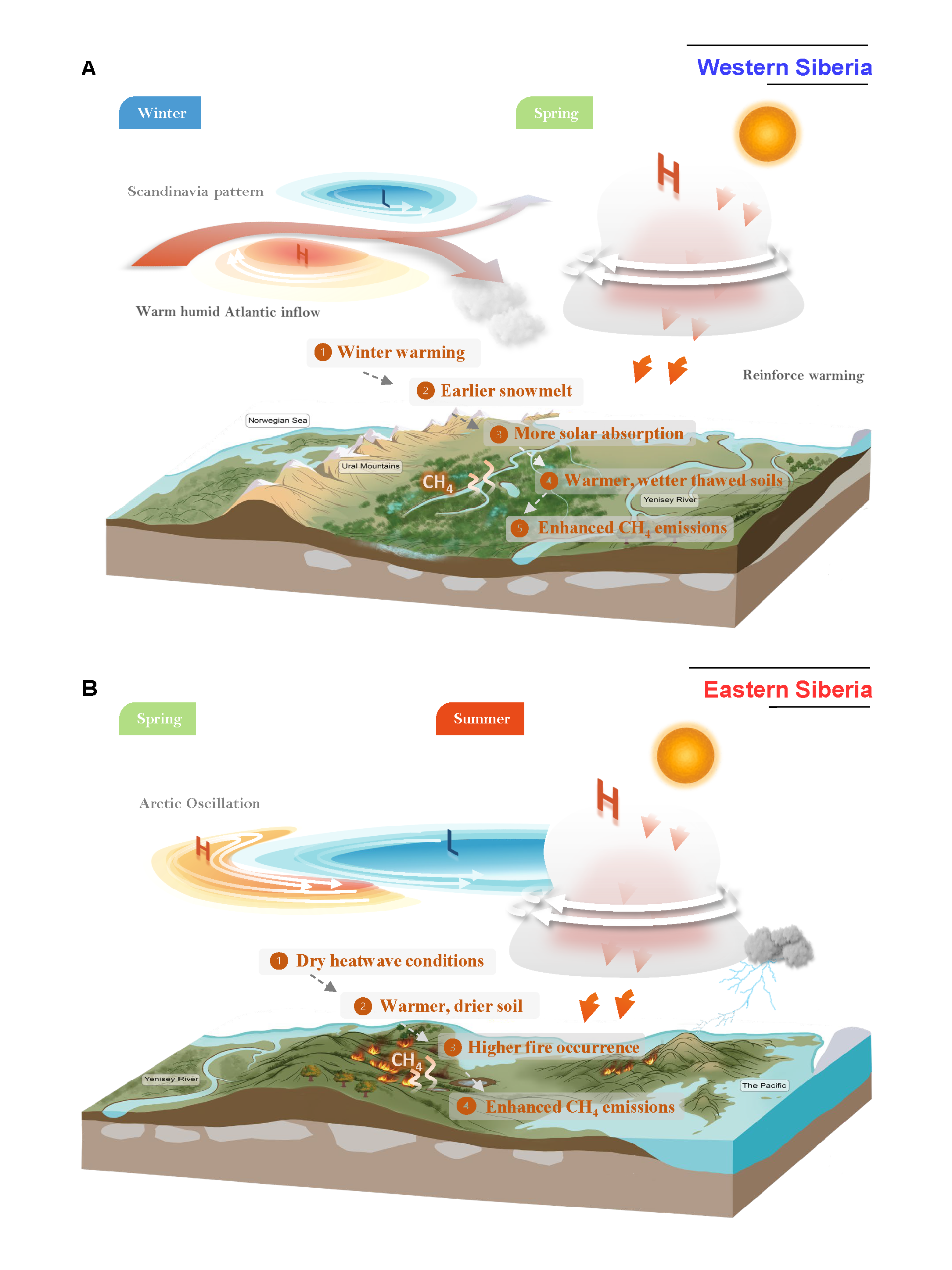
The study shows that this process is accelerating through two distinct pathways:
- In western Siberia, warmer and wetter conditions are boosting methane production in wetlands
- In eastern Siberia, hotter and drier conditions are fuelling wildfires, which release methane and further destabilise permafrost
Together, these processes are driving a rapid increase in emissions.
Wildfires intensifying the problem
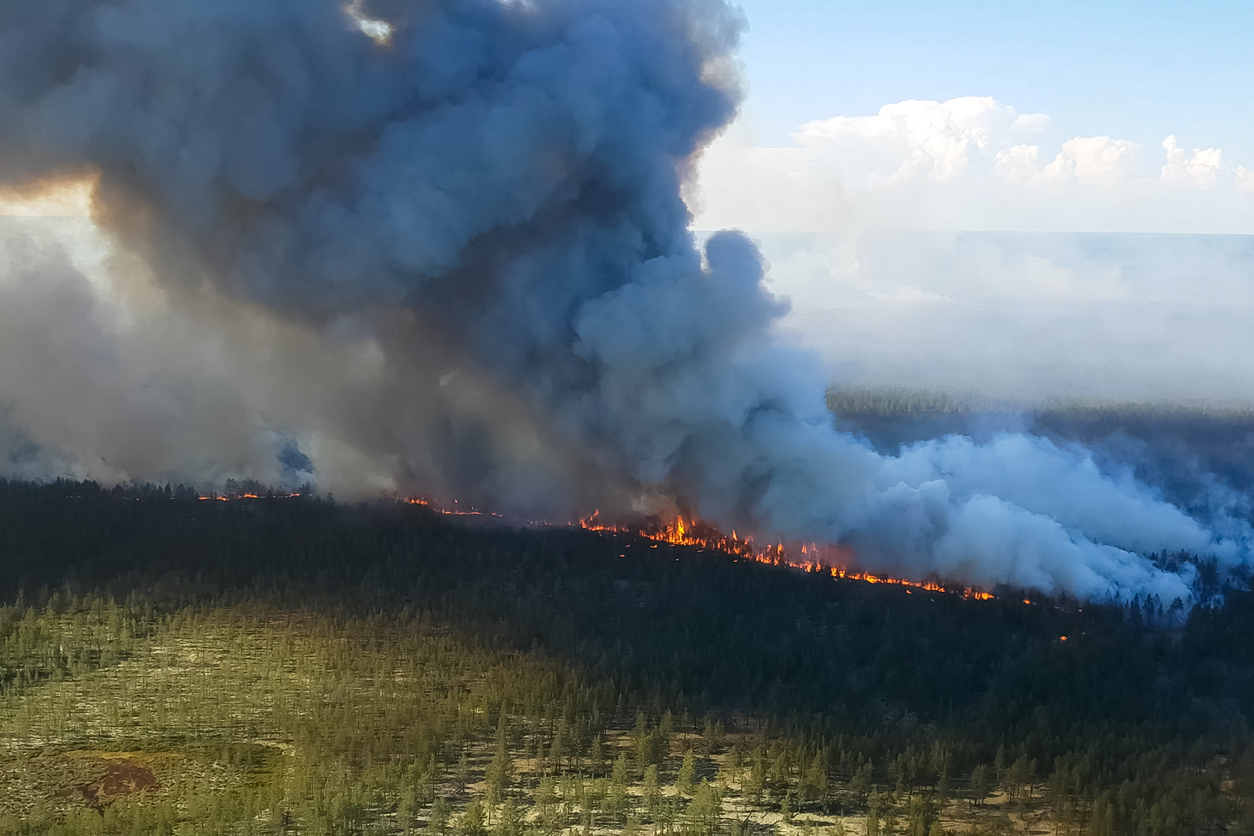
The research highlights a sharp rise in wildfire-driven methane emissions in eastern Siberia since 2019. Hotter, drier summers—linked to persistent high-pressure weather systems—are creating ideal conditions for large, long-lasting fires.
These fires release methane directly, but they also accelerate permafrost thaw, potentially leading to longer-term increases in emissions.
Implications for climate targets
Although Siberia produces a small share of global methane, the increase matters worldwide-including in the UK-because methane spreads quickly through the atmosphere and significantly contributes to global warming.
Researchers estimate emissions could rise by up to an additional 25 million tonnes a year by 2050-comparable to the methane output of some large, industrialised countries.
This wouldn’t cause warming on its own, but it would make climate goals harder to meet. Additional emissions like these could offset a substantial share of the methane cuts needed this decade to keep global warming close to 1.5°C.
In practice, this means that even if countries reduce their own emissions, rising methane from warming regions like the Arctic could add to the challenge-highlighting the need for faster global action.
Growing climate feedback
The findings suggest a worrying cycle: as the Arctic warms, more methane is released, which then causes further warming.
Scientists are not yet sure how far this process could go, but it raises the risk of longer-term change. Over time, the Arctic could shift from storing carbon in frozen ground to releasing it into the atmosphere.
What we are observing is a direct consequence of the Arctic warming, driven by rising greenhouse gases. As previously frozen ground begins to thaw, stored carbon becomes available for microbes, which can produce methane as they break it down. In other regions, warmer and drier conditions are increasing the risk of wildfires, which release additional greenhouse gases, including methane and carbon dioxide.
Professor Paul Palmer
This research would not have been possible without the UK’s national Earth observation capability at NCEO, with satellite data providing the only practical way to monitor methane emissions across Siberia’s vast and inaccessible landscape.”
NCEO Science Director at the University of Edinburgh
Cutting-edge satellite analysis
The team combined data from Japan’s GOSAT satellite with ground-based observations and advanced modelling developed at institutions including the University of Edinburgh.
This integrated approach allowed researchers to map methane emissions across Siberia in unprecedented detail and identify the underlying climate processes driving them.
Share this article


Published by Fazila Patel
Digital Comms Officer
University of Leicester
Latest News and Events
