

News and Media
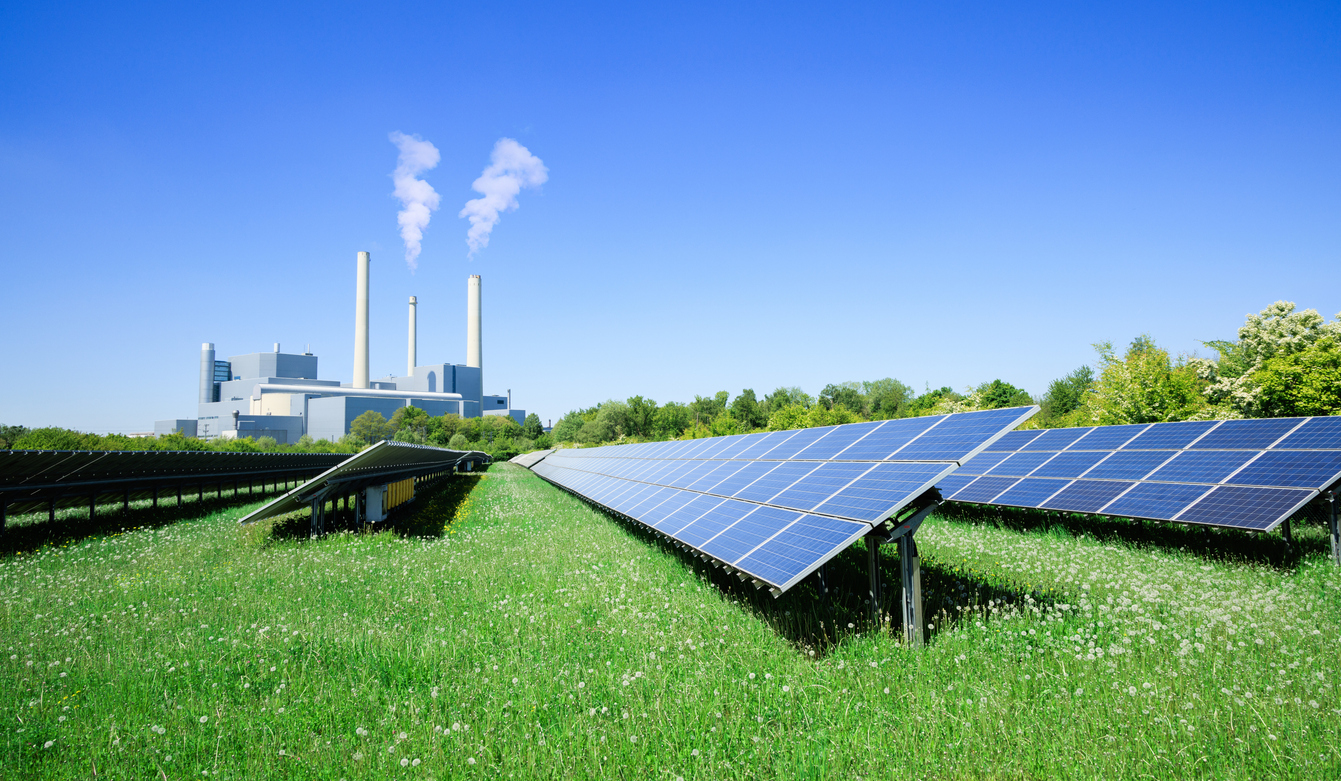
Coal pollution is cutting solar power generation worldwide
Nature Sustainability study highlights hidden barrier to the clean energy transition

Researchers from the UK National Centre for Earth Observation (NCEO), the University of Oxford, University College London (UCL), and the University of Leicester have published a new study in Nature Sustainability showing that air pollution from coal fired power plants is significantly reducing the performance of solar photovoltaic (PV) systems worldwide.
The study, led by Dr Rui Song at the University of Oxford, used satellite observations, machine learning, and atmospheric modelling to analyse more than 140,000 solar PV installations globally. The researchers found that aerosol pollution reduced global solar electricity generation by 5.8% in 2023, equivalent to around 111 terawatt hours (TWh) of lost electricity. This amount of lost energy is comparable to the annual electricity generation of around 18 medium sized coal fired power plants.
The findings reveal a previously underappreciated interaction between fossil fuel infrastructure and renewable energy systems. While solar power capacity continues to expand rapidly worldwide, pollution from coal fired power plants is simultaneously reducing the amount of solar electricity generated.
We are seeing rapid global expansion of renewable energy, but the effectiveness of that transition is lower than often assumed. As coal and solar expand in parallel, emissions alter the radiation environment, directly undermining the performance of solar generation.
Dr Rui Song
Lead Author
Between 2017 and 2023, newly installed solar PV systems added an average of 246.6 TWh of electricity generation each year globally. However, aerosol related losses from existing solar systems reached an average of 74.0 TWh annually over the same period. This means that pollution related losses offset nearly one third of the gains delivered by newly installed solar capacity.
China experiences the largest solar losses
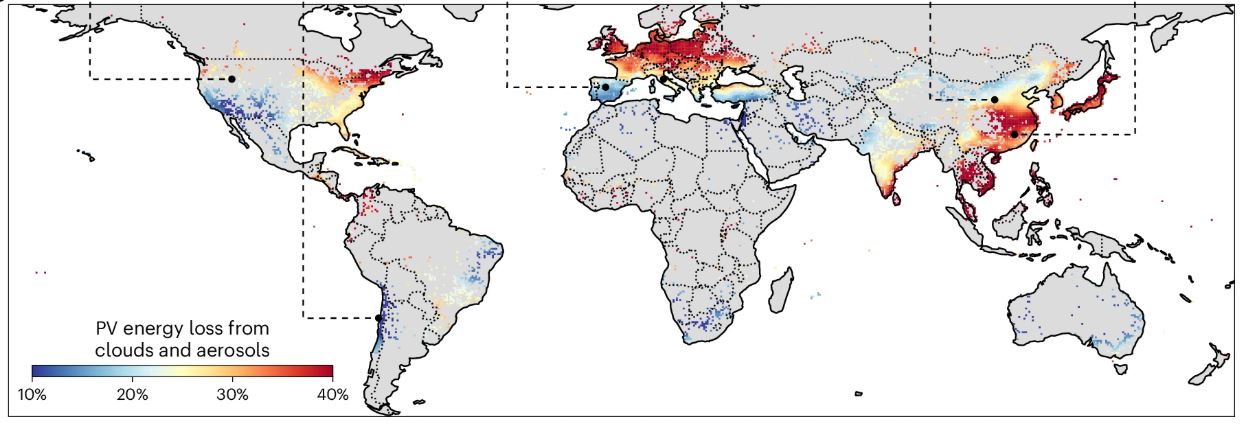
The effects were particularly strong in China, where coal fired power generation and solar deployment have expanded rapidly and are often geographically co located.
China generated 793.5 TWh of solar PV electricity in 2023, representing around 41.5% of the global total, but also experienced the largest aerosol related reductions in solar generation. The study estimates that aerosol pollution reduced China’s solar PV output by 7.7%.
Using atmospheric chemistry modelling, the researchers estimated that around 29% of aerosol related solar losses in China are directly attributable to emissions from coal fired power plants. The study also found that regions with high coal power capacity strongly overlap with regions experiencing the greatest solar PV losses.
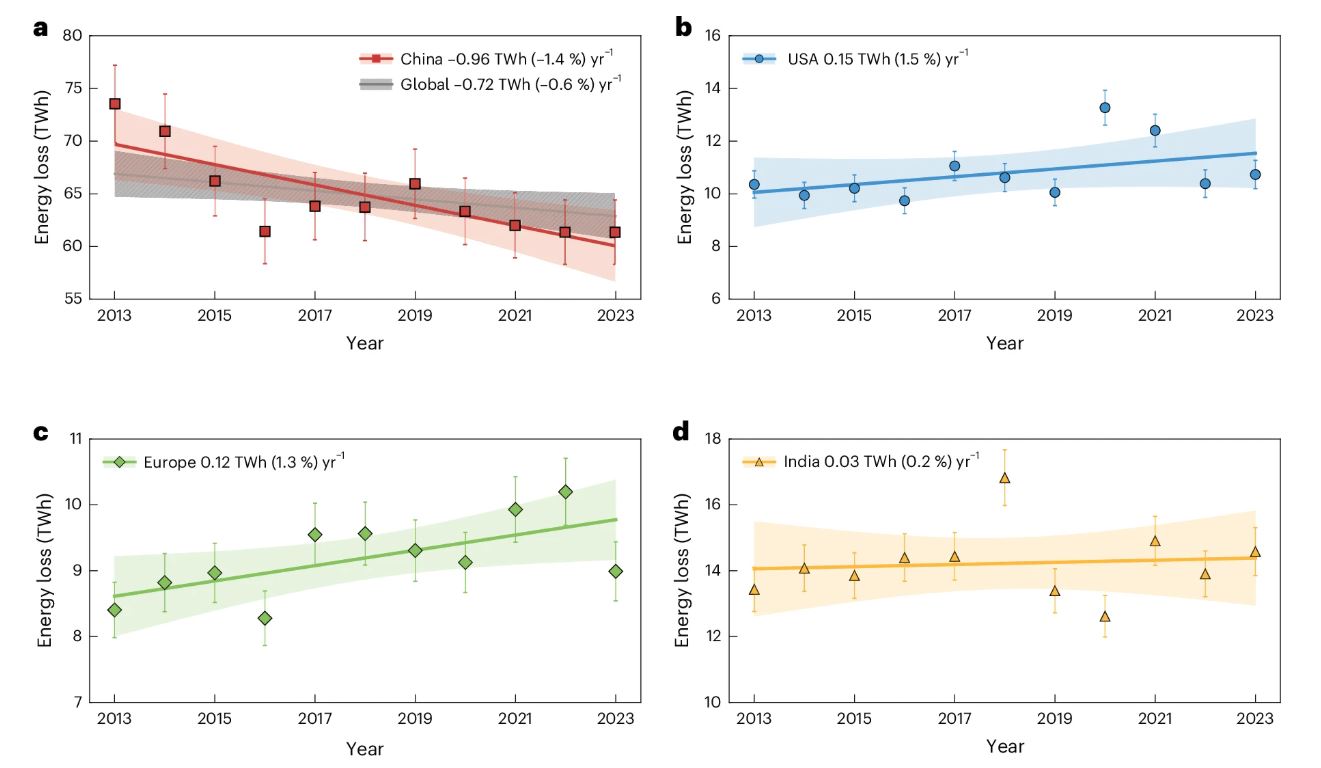
Despite these large losses, China was also the only major region showing a sustained decline in aerosol related solar losses over the last decade. The researchers attribute this improvement primarily to stricter pollution controls and the adoption of ultra-low emission technologies in coal fired power plants.
Implications for energy and climate policy
The study highlights that the success of the global energy transition cannot be assessed through installed renewable capacity alone. The researchers argue that air quality, fossil fuel infrastructure, and renewable energy systems must be considered together when evaluating progress towards climate targets.
The findings also suggest that continued dependence on coal power may impose an additional hidden cost on renewable energy systems by reducing the efficiency and output of solar installations.
The researchers note that the estimates presented in the study likely represent a conservative lower bound because they include only the direct effects of aerosols on sunlight and do not fully capture indirect impacts through aerosol cloud interactions..
About the study
To conduct the analysis, the researchers combined satellite imagery, machine learning, atmospheric reanalysis data, and solar energy modelling to create a new global dataset tracking facility level solar PV generation and atmospheric losses.
The study mapped more than 140,000 solar PV facilities worldwide and estimated how clouds and aerosols affect electricity generation at each location.
The work was supported in part by the UK Natural Environment Research Council (NERC) through the National Centre for Earth Observation (NCEO).
Notes
The study was published in Nature Sustainability:
https://www.nature.com/articles/s41893-026-01836-5
Interactive visualisation:
https://pvfacilitymap.uk/
The underlying global dataset and code have been publicly released by the authors.
Share this article


Published by Fazila Patel
Digital Comms Officer
University of Leicester
Latest News and Events
