

News and Media
Developing a new CrIS data processing capability for ammonia retrieval

Overview
NCEO researchers at the University of Leicester have developed a new Python-based workflow to process satellite data from the Cross-track Infrared Sounder (CrIS), supporting improved retrieval of atmospheric ammonia (NH₃). The capability, developed by Ankita Patel, a Software and Data Engineer working with NCEO, replaces legacy tools with a modern, reproducible approach that is easier to maintain, share and extend.
The Challenge
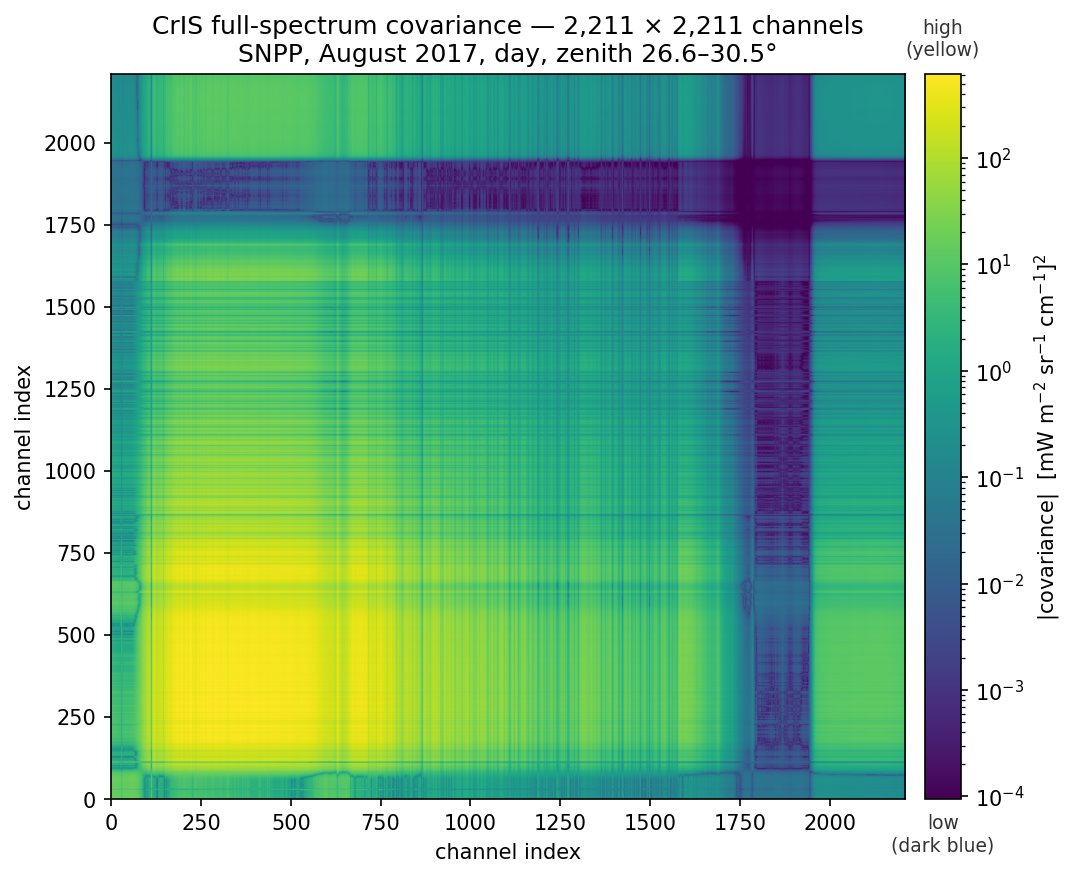
CrIS instruments, flying on the Suomi NPP, NOAA-20 and NOAA-21 satellites, provide high-resolution infrared measurements across 2,211 spectral channels. These observations are essential for monitoring trace gases such as ammonia.
To use these data in retrieval algorithms, scientists must first generate covariance products that describe how radiance varies across spectral channels. No existing Python capability existed at Leicester to generate CrIS covariance products. CrIS data is distributed across three separate NetCDF product types — L1B radiances, CLIMCAPS L2 retrievals, and VIIRS cloud masks — with distinct array layouts and quality flag conventions that vary across the Suomi NPP, NOAA-20 and NOAA-21 platforms. Producing scientifically usable radiances also requires instrument-specific processing steps whose conventions were established from an existing IDL reference procedure. The complete pipeline was designed and built from scratch.
The Solution
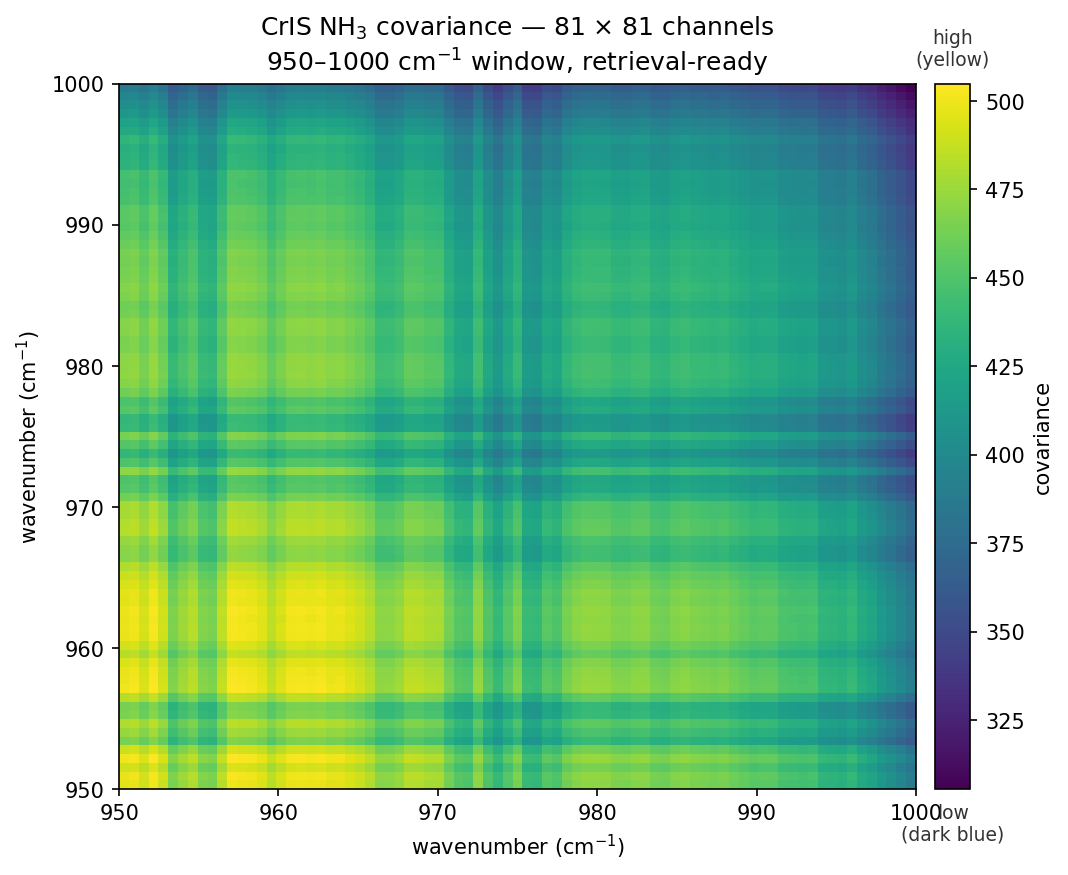
The team developed a new Python workflow that converts raw CrIS observations into retrieval-ready covariance datasets. The tool, part of the cov-packager framework, processes one month of observations at a time and produces statistical summaries of radiance variability in ammonia-sensitive spectral regions.
The workflow:
- applies instrument and geolocation quality checks
- uses VIIRS cloud data to select clear-sky observations
- groups data by viewing geometry and time of day
- generates covariance outputs in standard HDF5 format
How it works
The system is designed as a modular pipeline:
Collect → Split → Covariance → Ammonia subset
Each stage produces an output that can be inspected or reused independently, improving transparency and flexibility. The workflow is also optimised to run on both local systems and high-performance computing environments.
All outputs include provenance metadata, recording input datasets, processing settings and software versions. This ensures results can be reproduced and audited.
Results and Validation
The pipeline was validated against official NASA/NOAA product format specifications and quality flag documentation for each data source (CrIS L1B SDR, CLIMCAPS L2, VIIRS cloud mask). The workflow is configurable and platform-agnostic, supporting Suomi NPP, NOAA-20 and NOAA-21 from a single codebase.
The outputs include:
- ammonia-window covariance products used directly in retrievals
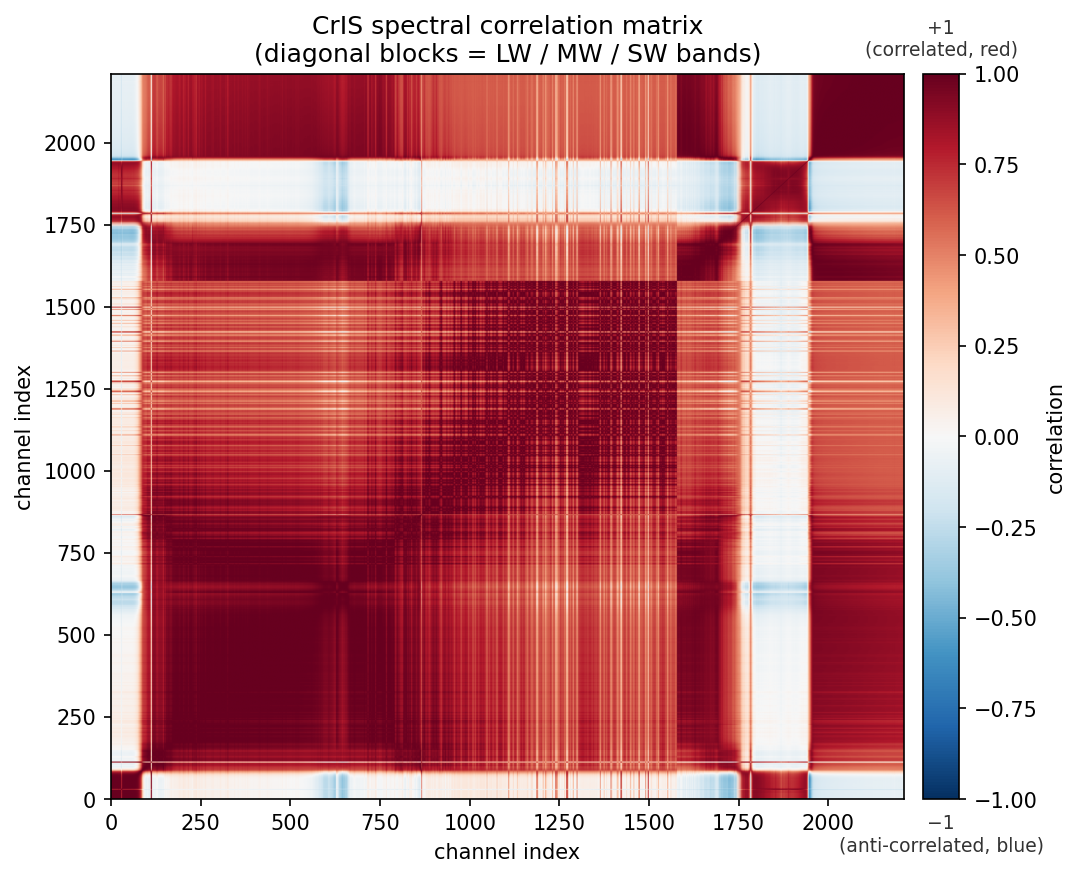
- full covariance matrices across all CrIS channels
Impact
This work modernises a key part of NCEO’s atmospheric data processing capability. By replacing a legacy workflow with a documented Python solution, it improves:
- reproducibility and transparency
- ease of collaboration
- long-term maintainability
The new capability is already being used by the NCEO Atmospheric Composition group at Leicester to support ongoing ammonia retrieval research.
Next steps
The workflow provides a flexible foundation for future development, including:
- application to additional satellite instruments
- extension to other atmospheric trace gases
- wider use across NCEO and partner organisations
Developed by Ankita Patel, Software and Data Engineer, NCEO Atmospheric Composition group, University of Leicester
Share this article


Published by Fazila Patel
Digital Comms Officer
University of Leicester
Latest News and Events
